
Footnote App Case Study
A habit-driven product that motivates users to build a daily walking routine through one purposeful quest completed on each walk.
Role
Research, UI Design, Pretotyping, Prototyping, Usability Testing
Duration
8 weeks
Tools
Figma

The Problem
People struggle to maintain consistent walking habits when the experience feels repetitive and lacks motivation.
The Approach
I applied behavior design principles and the Hooked Model to create a habit-forming product centered around daily movement and mindful discovery.
The Solution
Footnote transforms a daily walk into one intentional quest, helping users build consistency through curiosity, reflection, and small moments of joy.
MoSCow Feature Anaylsis
I used the MoSCoW method to help prioritize features and guide what needed to be included in the first version of the product. This helped me focus on building an MVP with the core functionality needed for early users to engage with the experience and provide meaningful feedback. While designing Footnote, I prioritized the must-haves first, while still leaving room for should-haves and could-haves as the product continues to grow.

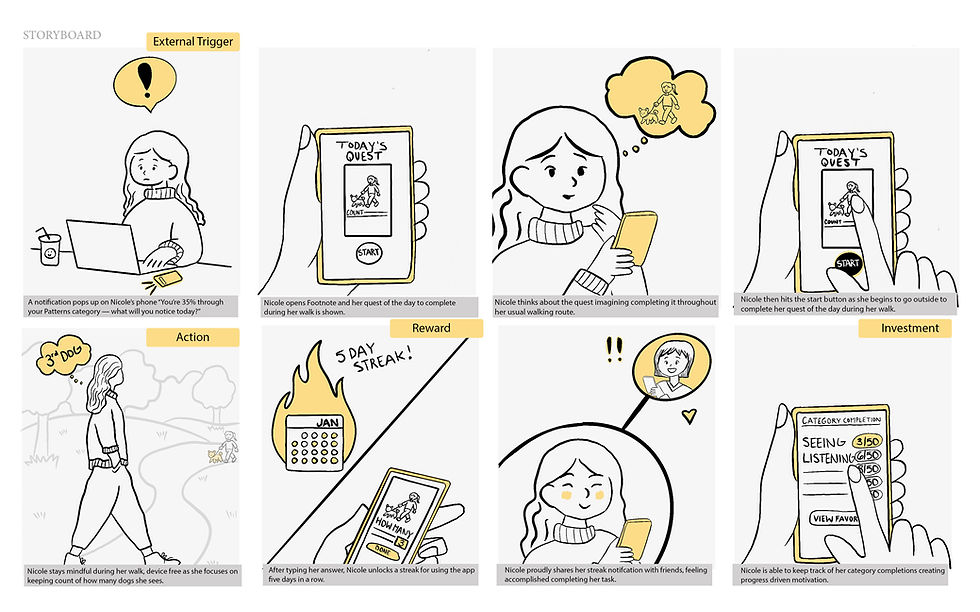
Storyboard
This storyboard shows the user journey from onboarding to daily use, while highlighting key moments of the Hooked Model such as trigger, action, and reward.
User Flow

Hand Drawn Wireframes

Low Fidelity Wireframes
Created in Figma, these low-fidelity wireframes helped establish the structure and user flow of the experience early in the design process.


